
I mentioned previously that the Federal Register is an important, often overlooked, avenue for action and understanding. Today, I encourage you to participate. If nothing else, it should feel good to express your opinion in a way that should be preserved in the National Archives and Federal Register. You can also read the comments already there for inspiration and recognition of other’s ongoing efforts and concerns.
Here’s where you go: https://www.regulations.gov/document/FWS-HQ-ES-2025-0034-0001
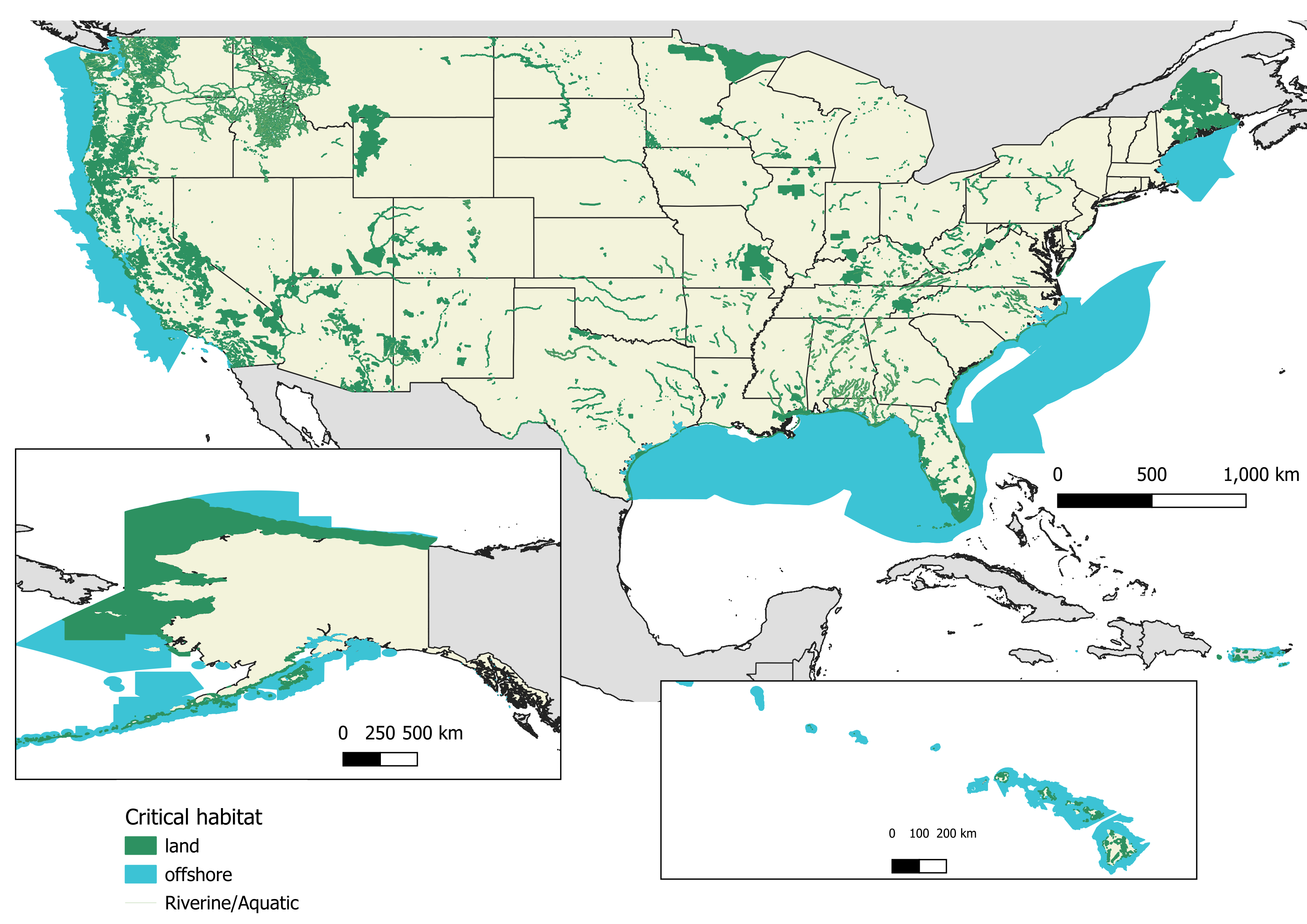
The administration has proposed a rule to rescind the definition of “harm” under the Endangered Species Act (ESA) and limit it to yet another 19th century definition of species management. This change will make it difficult to justify private and public critical habitat investments made to help preserve and/or recover threatened and endangered species. It will mean that all you have to do to avoid violating the act is not physically assault or kill an endangered species. You will effectively be able to destroy and degrade both land and marine habitat as long as you don’t actually see or touch any creatures on the endangered species list (animals or plants). It puts virtually all the areas in the map here back up for the wholescale destruction that is becoming a hallmark of the administration.
It is true that the ESA has a long and complicated politico-economic history because it pits real resource limitations against each other in concrete and costly ways. It has not always been economically efficient nor ecologically optimal, but it has had some significant successes and has also inspired conservation efforts not only within the US but around the world. The original wording of the ESA was entirely prohibitionary; this essentially placed infinite value on species conservation over other land and species uses, and must be considered rather untenable in this dogmatic approach. Changes in the act have been compromises intended to maintain or improve the ability to conserve endangered species and biodiversity while still allowing the private landowners or public land use managers involved some stability and certainty in their actions.
All of the current critical habitat designations – covering 900 or so species – have been through long, involved processes where stakeholders have had a great deal of input and influence on how to minimize the economic impacts of these designations while still rendering them useful to conservation. The administration may be trying to argue that this new proposed change in this framework; it is not. It is part and parcel of the continuing onslaught against our public lands, written up in Project 2025, and it opens up for yet more degradation of our lands and waters and increasing biodiversity losses in return for more timber, mining, and unsustainable development investments.
Originally passed in the Nixon years, the ESA followed from a long history of scaling up conservation concerns that were originally directed at species we tended to ‘use’ – from fur seals to game birds. You can read interesting papers covering the economics of the ESA, the specific case of the Tellico dam (by yours truly), which provoked the first ‘escape clause’ from the prohibitions of the ESA in 1978, and the history of Wildlife Law here, if you are so inclined.
But, more importantly, you need to act, and quickly. The proposed rule change is accepting comments until May 19th. As of now (May 6, 2025) there are over 26,000 comments on file. I can’t be sure how many are voicing dissent, but the first ten or so that I’ve opened all do. You can keep it simple: “This blatantly goes against the spirit and the intent of the Endangered Species Act, don’t make this change” or you can wax more poetic, get more scientific, and so on. You can post anonymously or take credit for your action.
For inspiration, some Wendell Berry:
Anger Against Beasts
Wendell Berry

The hook of adrenalin shoves
into the blood.  Man's will,
long skilled to kill or have
its way, would drive the beast
against nature, transcend
the impossible in simple fury.
The blow falls like a dead seed.
It is defeat for beasts
do not pardon, but heal or die
in the absence of the past.
The blow survives in the man.
His triumph is a wound. Spent,
he must wait the slow
unalterable forgiveness of time.
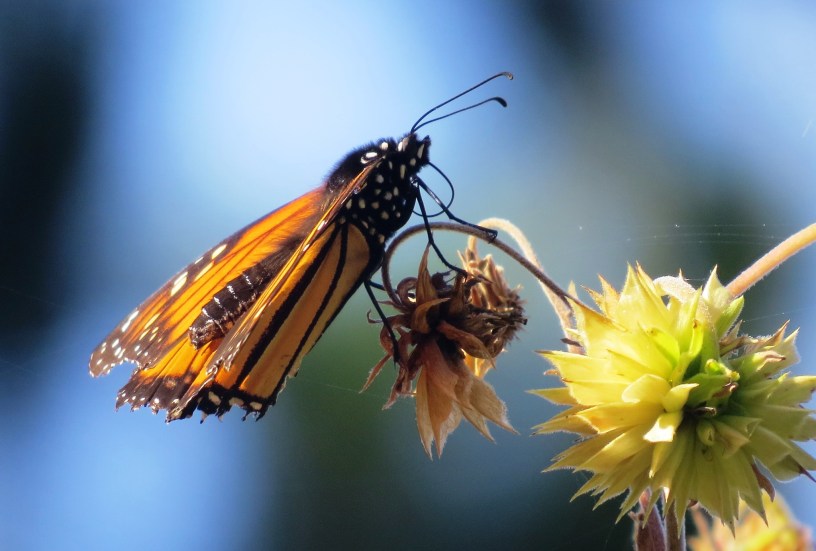
Cover Image Credit: Monarch Butterfly, Wings of Beauty by John William Hammond
 Mereconomics
You can find a guide to effective commenting on the comment page as “commenter’s checklist” https://www.regulations.gov/commenton/FWS-HQ-ES-2025-0034-0001
LikeLike