
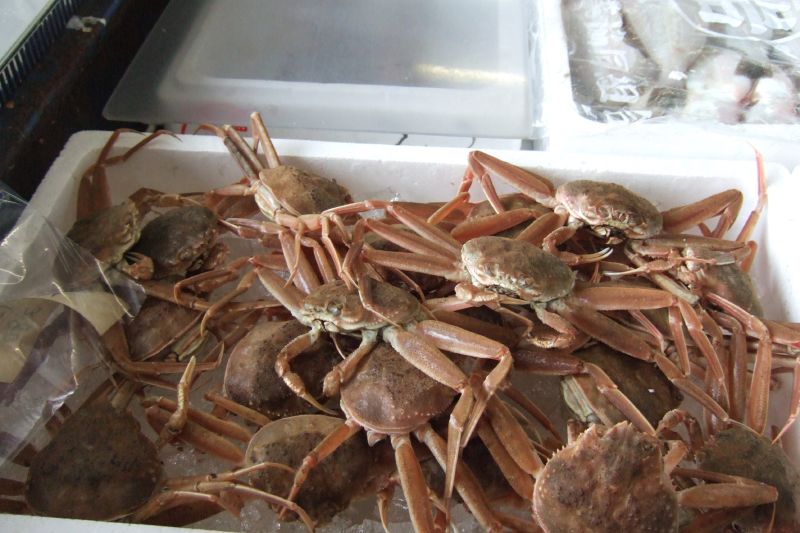
In 2024, Snow Crab scientists from the Atlantic and Pacific gathered in St. John’s Newfoundland to share insights on how crabs were faring with climate changes and differing fishing pressures. Here is the report of all the great science!!
EXECUTIVE SUMMARY
Workshop presentations were organized by topic within 3 primary theme sessions:
● Theme 1: Physical Ecosystem Dynamics included presentations on the dynamics of atmospheric and ocean circulation, air and sea temperatures, and sea ice in the eastern Bering Sea (EBS), Newfoundland and Labrador (NL), Gulf of St. Lawrence (GSL), and Barents Sea, as well as ecosystem approaches for each region.
● Theme 2: Exploratory Population Modeling included presentations on modeling spatial dynamics of snow crab populations and fishing fleets using a variety of different techniques among regions, considerations of predation of snow crab in the eastern Bering Sea and coast of Newfoundland, considerations of skip molting in population models, and an analysis of the formerly strong correlation between NL and EBS stocks of snow crab that has no longer held since 2020.
● Theme 3: Applied Management included talks on innovations in snow crab pots (traps), application of indicators of stock health to fishery management in the EBS and NL, considerations of legal size, precautionary approaches to fishery management, and comparisons of harvest rates and stock outcomes in the EBS and NL.
Research presented during this workshop, including comparisons among North Pacific and North Atlantic stocks, yielded a number of important findings relevant to snow crab fishery management. These included:
THE ROLE OF CLIMATE ON SNOW CRAB PRODUCTIVITY
● Snow crab is an Arctic species that thrives in cold water. In NL, the cold intermediate layer (CIL) is most important to snow crab, whereas in the EBS it is the cold pool. In NL, cold water and sea ice data lags match well with abundance of age-1 snow crab. Most of the NL shelf is dominated by cold water in summer. In the EBS, the bottom cold pool in summer is a function of sea-ice extent the previous winter. A difference across the regions is the presence of the cold arctic-origin Labrador Current in NL.
● Bottom temperatures and sea ice covary with the North Atlantic Oscillation (NAO) and Arctic Oscillation (AO) indices, which describe fluctuations in surface atmospheric pressure that influence the strength and direction of winds and storm tracks in northern latitudes. Fishable snow crab biomass has a 5–9 year lag from fluctuations in the NAO.
● At least 2 mechanisms may be responsible for the relationship between cold temperatures and snow crab productivity: (1) cold temperatures serve as a refuge for small snow crab from groundfish predation; and (2) cold temperatures along with extensive sea ice promote ice-related phytoplankton blooms composed of nutritious diatoms that settle to the seafloor during senescence (old age) where they can be consumed by snow crabs. Interestingly, whereas cold temperatures benefit juvenile snow crab, warm temperatures promote the growth of adult snow crab.
● Historically, the EBS and NL snow crab stocks have generally covaried together. However, since 2020, the correlation between EBS and NL snow crabs has broken down owing to the collapse of the EBS stock and the sustained strong performance of NL stock. The collapse of EBS snow crab over 2018–2021 has been attributed to starvation associated with a regional marine heat wave, leading to high metabolic demands, coupled to high densities of relatively small-sized mature crab. In contrast, the NL snow crab stock varies out of phase with the southern GSL stock depending on the strength of the NAO. In general, a positive-phase NAO leads to a stronger southward-flowing Labrador Current (LC) and cooler conditions on the eastern Newfoundland shelf, whereas relaxation of the NAO allows a larger proportion of the cold LC to flow past the Grand Banks and intrude into the GSL. Thus, the extent of the CIL in NL or the GSL depends on the strength and phase of the NAO, which in turn leads to out-of-phase correlations between NL and southern GSL snow crab.
OTHER ECOLOGICAL FACTORS AFFECTING SNOW CRAB
● Snow crab are often found in the stomachs of cod in both the North Pacific and North Atlantic. However, predation studies have yielded, at best, mixed results about the role of cod predation on snow crab population dynamics. Although some studies have implicated cod in snow crab declines, most have failed to detect such an effect in the EBS, NL, and southern GSL regions. One NL study suggested that predation could be deemed more as a recruitment index than a mortality indicator in stock assessment, particularly given that cod regularly consume a size range of crab that are not well-sampled by survey trawls.
● Bitter crab disease (BCD) is a parasitic infection that gives crab a bitter taste and renders infected crab unmarketable. It is assumed to be fatal in most cases. It has been detected in both North Pacific and North Atlantic snow crab. Current methods that involve sampling of hemolymph (fluid that functions as both blood and lymph in crustaceans) detect BCD with much greater accuracy than former visual detection methods that generally underestimate the prevalence of infection. In the EBS, there was a dramatic increase in BCD over 2015–2017, raising the question whether it contributed to recent population declines in snow crab. Some samples from the northern Bering Sea show prevalence approaching 70%, which is historically high. Because of imprecision of historical visual methods, it is not possible to infer long-term trends in BCD prevalence.
FISHING EFFECTS ON STOCK REPRODUCTIVE HEALTH AND SIZE AT MATURITY
● Harvest rates are similar among EBS and Canadian snow crab fisheries. Although there are differences in their specification, when harvest control rules are expressed using the same “apples-to-apples” metrics (i.e., biomass of males ≥95 mm carapace width, CW), exploitation rates applied in the EBS are quite similar to those used in the southern GSL and Northwest Atlantic Fisheries Organization (NAFO) Divisions 3Ps and 3LNO in NL, but slightly lower than those used in Divisions 3K and 2HJ in NL.
● In NL, a Precautionary Approach (PA) was put into place when the stocks were at low biomass levels and thought to be overexploited. Since the implementation of the PA, stocks have responded very favorably. Discards became low, clutch fullness became high, and CPUE became high. Also, importantly, declining trends in size at maturity ceased in areas of concern once PA management was initiated.
● In the NL PA, harvest control rules are based on estimated biomass but they also consider stock health scores based on predicted fishery CPUE, predicted discards, and female egg clutch size. The primary harvest control rules in the Precautionary Approach allow for up to 42%, 35%, and 20% exploitation rates, with no lower bounds, when the stock is categorized to be in healthy, cautious, and critical zones, respectively.
● EBS male snow crab have been experiencing a concerning long-term decline in size at 50% maturity since 2006, but the causes have not yet been examined. However, similar downward shifts in size of maturity in the NL region were attributed to cold conditions and low densities of large males. Low densities were caused by elevated fishery exploitation rates.
● The mechanism behind the relationship between higher harvest rates and lower size at maturity relates to competition by males for mates. Large males outcompete smaller males for mating opportunities. Large males can deliver large sperm loads to females for fertilization of large egg clutches. Although population densities of large males are high, small immature males tend to continue growing and ultimately reach large sizes that allow them to be reproductively successful. With excessive removal of large males by high fishery exploitation rates, small males undergo terminal molt to maturity sooner because they no longer need to compete with large males for mates. However, they are less competent in mating and multiple small mates may be required for the female to acquire sufficient sperm to fertilize full egg clutches. Also, mating with multiple smaller males causes females to suffer more injuries during mating, due to increased male aggression, and is sometimes fatal.
● In general, female clutch fullness is higher in NL than EBS snow crab: in 2022 just 37% of mature females in the EBS had clutch fullness of 75% full or greater, the lowest on record dating back to 1980.
● Skip-molting is the process by which a crab does not molt in the current year but retains the ability to molt again in subsequent years before attaining terminal molt. In NL, skip-molting occurs most frequently under extreme cold and high population density conditions. This phenomenon has not been fully evaluated in EBS snow crab. It may also be critical in determining the size structure and reproductive dynamics in arctic systems (e.g., Barents, Kara, Chukchi, and Beaufort Seas) into which snow crab are expected to expand their populations as climate change progresses.
Many potential research priorities were identified during workshop discussions. The list of important ones included strengthening future collaborative research, further work on indices of stock reproductive health including changes in size at maturity related to harvest rates, appropriate size limits in light of size at maturity, conduct of a management strategy evaluation for the EBS stock, laboratory studies of crab physiology with respect to temperatures experienced during the 2018–2021 EBS marine heat wave, identification of critical habitats (e.g., nursery areas), impacts of “pelagic” trawls (i.e., as defined for Alaskan fisheries) on crabs, ghost fishing of lost crab pots, gear research to reduce bycatch, and enhancement of our understanding of fisheries as coupled socio-ecological systems including the need for adaptation strategies. The Discussion section further elaborates on these and other research topics.
Cover image credit: https://commons.wikimedia.org/wiki/File:Snow_crabs_at_the_port_in_Murakami_-_Mar_19,_2007.jpg
 Mereconomics
