
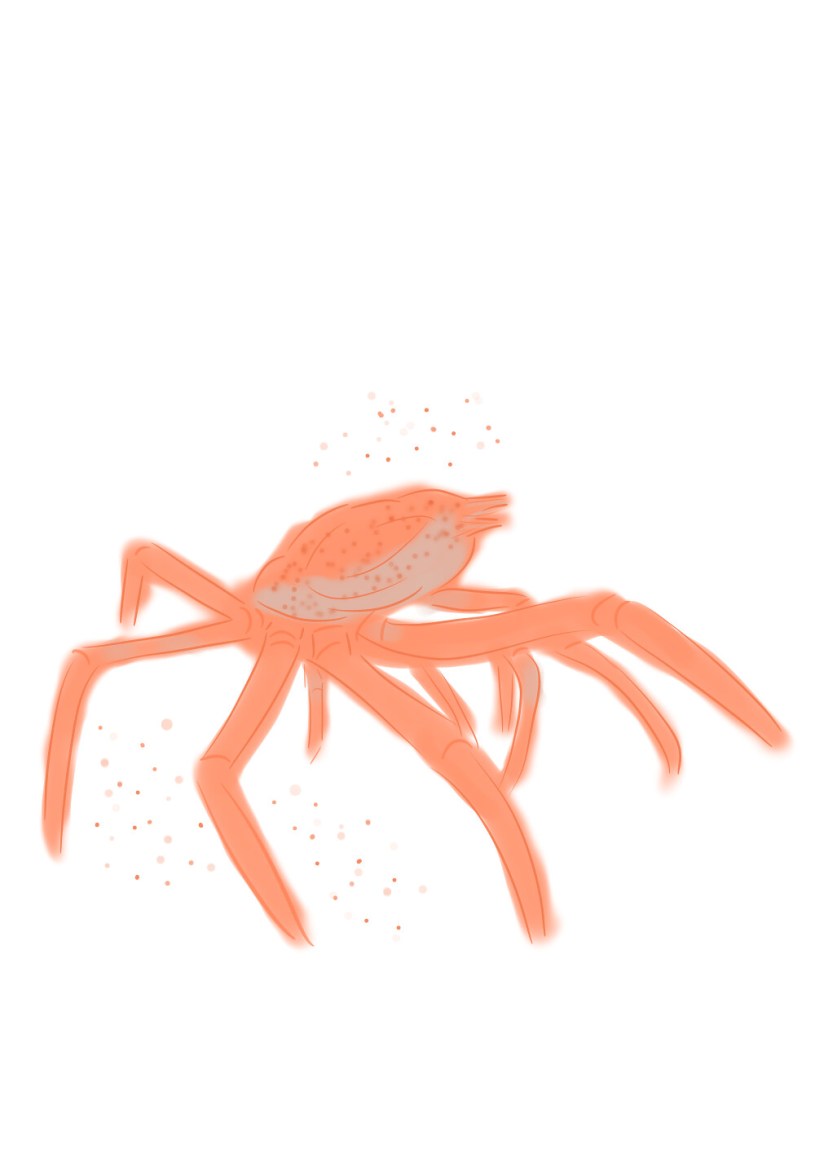
Amidst the chaos, work continues. The crabs march on, in a new paper out with co-authors from the now-completed PICO (Participatory modelling of integrated ecosystem based management regime for invasive crabs) Project.
As in most of my discussions of the crab invasions in the Barents Sea, I would argue that these ecosystem disruptors provide insights far beyond their individual nuisances (e.g. benthic destruction, cod net entanglements) and opportunities (e.g. fishery and tourism income). The paper’s results remind us to be mindful of how we ask questions about the choices we want to make, so that we accurately reflect on the limits of our capabilities (e.g. budget, time, technology). On the “economics is the dismal science” side of things, this reminder that we can’t have everything we want is indeed depressing. But on the economics is about “understanding the truth lets us use (and/or conserve) resources more effectively and efficiently, to get as much as we truly want as is possible,” information accuracy is vital. And so, with this broader perspective, there is indeed a poem:
Go to the Limits of your Longing
by Rainer Maria Rilke

God speaks to each of us as he makes us,
then walks with us silently out of the night.
These are the words we dimly hear:

You, sent out beyond your recall,
Go to the limits of your longing.
Embody me.

Flare up like a flame
and make big shadows I can move in.
Let everything happen to you: beauty and terror.

Just keep going. No feeling is final.
Don’t let yourself lose me.

Nearby is the country they call life.
You will know it by its seriousness.

Give me your hand.

Geh bis an Deiner Sehnsucht Rand (original German)
by Rainer Maria Rilke

Gott spricht zu jedem nur, eh er ihn macht,
dann geht er schweigend mit ihm aus der Nacht.
Aber die Worte, eh jeder beginnt,
diese wolkigen Worte, sind:
Von deinen Sinnen hinausgesandt,
geh bis an deiner Sehnsucht Rand;
gieb mir Gewand.
Hinter den Dingen wachse als Brand,
dass ihre Schatten, ausgespannt,
immer mich ganz bedecken.
Lass dir Alles geschehn: Schönheit und Schrecken.
Man muss nur gehn: Kein Gefühl ist das fernste.
Lass dich von mir nicht trennen.
Nah ist das Land,
das sie das Leben nennen.
Du wirst es erkennen
an seinem Ernste.
Gib mir die Hand.

–
You can find the new paper here:
Abstract:
Invasive species pose a challenging management issue, requiring prioritization of which species to target and the intensity of management needed to curb their spread. This paper uses data from a stated choice experiment to elicit the Norwegian population’s willingness-to-pay (WTP) for reducing the spread of the invasive Red King Crab (RKC) from the Barents Sea. This scenario highlights ongoing control and management challenges of this species in Norway. We analyze how WTP for managing the RKC changes when management is embedded within the broader context of managing other invasive species in Norway. Our findings indicate that reminding respondents about the focus on RKC leads to a downward shift in WTP. This shift occurs only for the reduced spread attribute, not for other environmental attributes, suggesting the reminder effectively reduces embedding. Our results are robust across model and utility function specifications. Failure to correct for embedding may result in over-valuation of the embedded good, impacting decisions on conservation or economic exploitation. Implementing an “embedding reminder” may be a cost-effective measure to mitigate embedding in similar studies.
Keywords: Invasive alien species · Embedding · Information effects · Willingness-to-pay · Stated preference
Cover Image Credit: “PNW Saltwater – More 12 – red king crab” by Duel Card Game is licensed under CC BY-SA 2.0.

